-
Through the PLATFORM annual exhibition series, which includes the UTAS Bett Gallery Award, Bett Gallery maintains its sustained commitment to supporting emerging and early-career artists. PLATFORM brings together a focused selection of artists whose work reflects the range, ambition and strength of contemporary practice. For more than 15 years, the exhibition has been a key part of the gallery’s program — offering meaningful exposure at a pivotal stage in an artist’s career. More than a showcase, PLATFORM provides a professional context that helps position artists within the broader contemporary landscape, while giving audiences insight into the direction of the next generation.
-
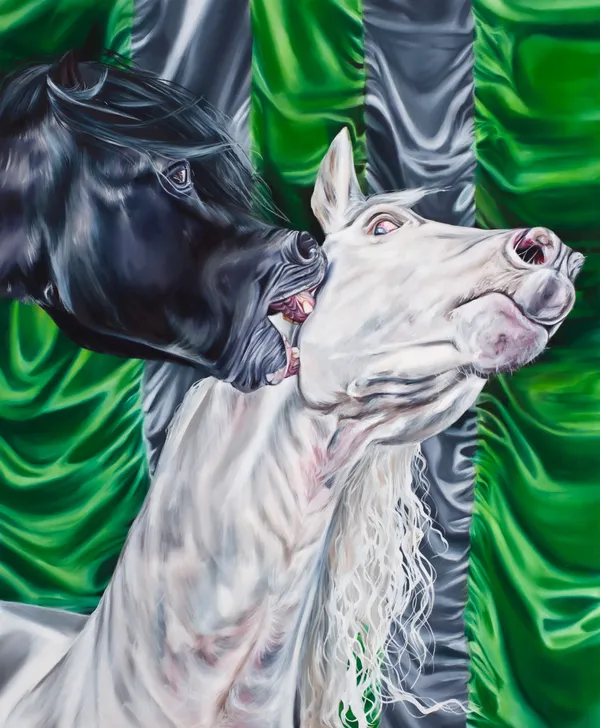
sophie coe
-

-
JOSHUA HARVEY
-
-
-
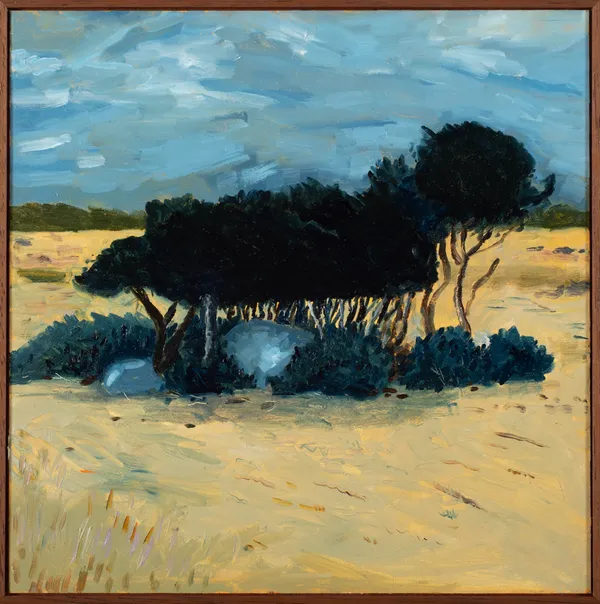
Joshua HarveyHuddling trees in rolling fields, 2026oil on canvas77 x 71 cm (stretcher size)Soldview more images
-
-
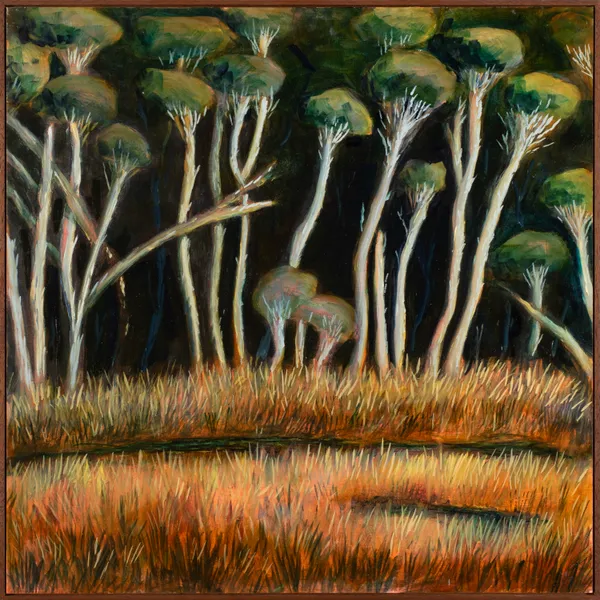
Joshua HarveySwelling grove, 2026oil on canvas83 x 102 cm (stretcher size)Soldview more images
-
Joshua HarveyGathering trees, 2026oil on canvas108 x 93 cm (stretcher size)Soldview more images
-
-
Joshua Harvey
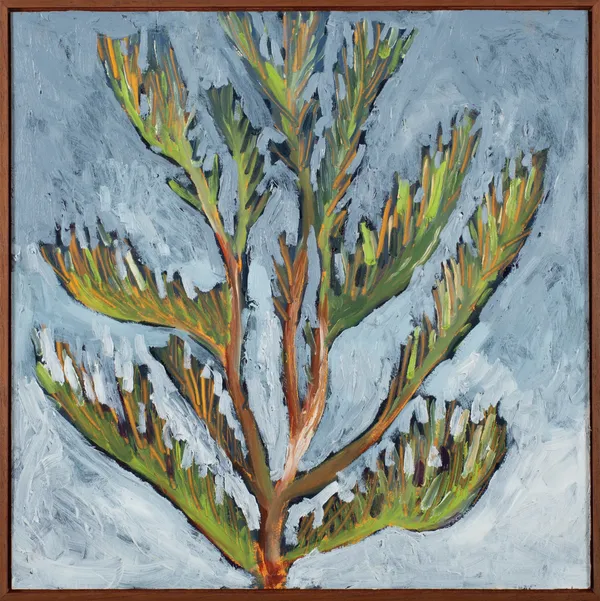
Vertical expanse, 2026oil on canvas
72 x 102 cm (stretcher size)Reserved -
samantha hawley
-
-
Samantha Hawley
Leave me be, 2026acrylic, oil, oil stick & oil pastel on canvas
90 x 120 cm (stretcher size)AU$ 1,250.00 -
NATALIE HOLTSBAUM
-
-
-
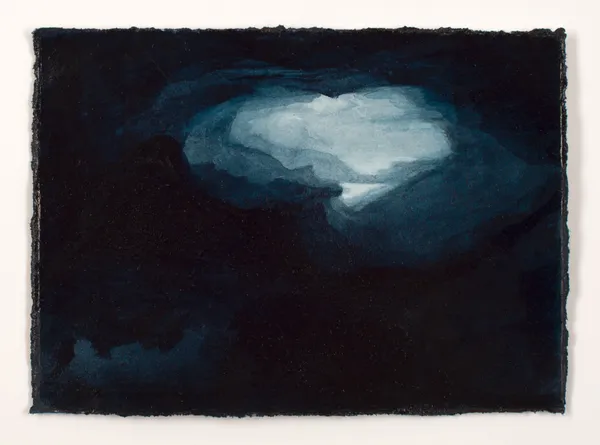
Natalie HoltsbaumLow Signal Field / Horizon Compression, 2026ink on paper, framed14.5 x 10.5 cm (paper size) 27.5 x 23.5 cm (frame size)Sold
-
Natalie HoltsbaumAttenuated Signal / Narrow Band Emission, 2026ink on paper, framed12.5 x 10 cm (paper size) 25.5 x 23 cm (frame size)Sold
-
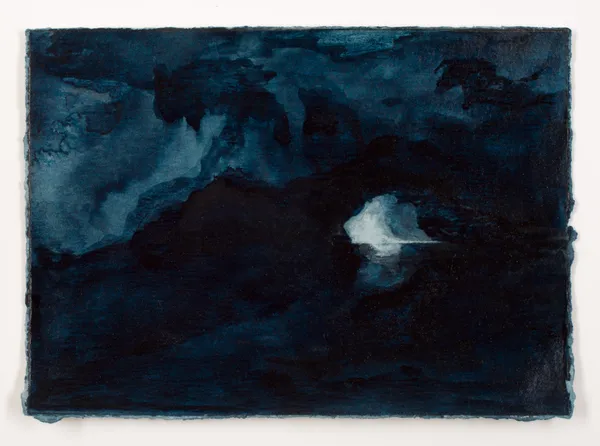
Natalie HoltsbaumField Drift / Suspended Mass, 2026ink on paper, framed12 x 21 cm (paper size) 23.8 x 33.8 cm (frame size)Sold
-
Natalie HoltsbaumThreshold Register / Contained Luminous Core, 2026ink on paper, framed7.5 x 10.5 cm (paper size) 20.5 x 23.5 cm (frame size)Sold
-
Natalie HoltsbaumField Expansion / Luminous Spread, 2026ink on paper, framed21 x 15 cm (paper size) 34 x 28 cm (frame size)Sold
-
Natalie HoltsbaumSignal Gain / Asymmetric Bloom, 2026ink on paper, framed29 x 24 cm (paper size) 41 x 37 cm (frame size)Sold
-
Natalie HoltsbaumThreshold Event / Reflective Passage, 2026ink on paper, framed30 x 24.5 cm (paper size) 42.5 x 37.5 cm (frame size)Sold
-
Natalie HoltsbaumEmergence Event / Diffused Opening, 2026ink on paper, framed14 x 20 cm (paper size) 27 x 32.7 cm (frame size)Sold
-
Natalie HoltsbaumMaterial Interference / Surface Disruption, 2026ink on paper, framed10.5 x 7.5 cm (paper size) 23.5 x 20.5 cm (frame size)Sold
-
-
leigh rigozzi
-
-
-
-
Leigh RigozziBonfire, 2026oil on panel, framed41.6 x 41.6 cm (frame size)Sold
-
-
-
-
-
-
Leigh RigozziFalmouth II, 2025oil on panel, framed24.5 x 24.5 cm (frame size)Sold
-
-
Leigh RigozziFertile Valley, 2026oil on panel, framed41.5 x 41.5 cm (frame size)Sold
-
Leigh RigozziFigure at Window, 2025oil on panel, framed64 x 76.5 cm (frame size)Sold
-
Leigh RigozziHill near St Mary's, 2024acrylic gouache on panel, framed32 x 32 cm (frame size)Sold
-
Leigh RigozziHill near St Mary's X, 2024acrylic gouache on panel, framed16.5 x 16.5 cm (frame size)Sold
-
Leigh RigozziIcarus/Bin Fire, 2025oil on panel, framed64 x 76.5 cm (frame size)Sold
-
-
-
-
-
-
-
-
-
-
Leigh RigozziScrum, 2026oil on panel, framed47.5 x 47.5 cm (frame size)Sold
-
-
Leigh RigozziSuburban Crime Gang, 2026oil on panel, framed
76.5 x 64 cm (frame size)Sold -
Leigh RigozziThe Durry Munchers, 2026oil on panel, framed41.5 x 41.5 cm (frame size)Sold
-
-
-
-
Armie Sungvaribud
-
-
-
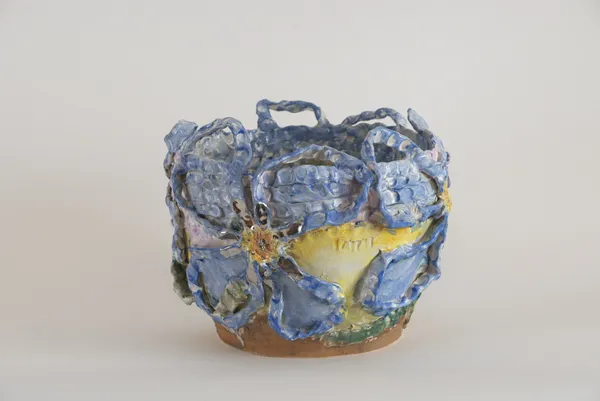
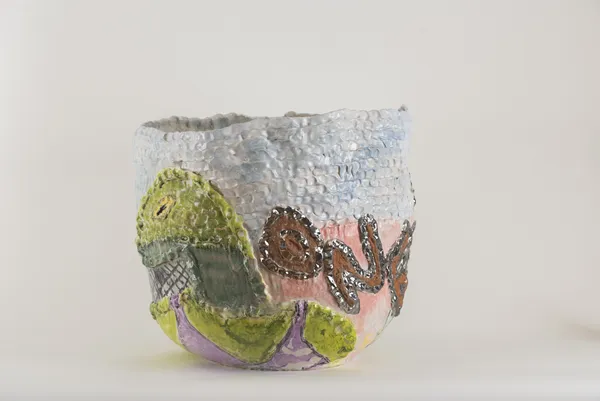
Armie SungvaribudAgapanthas, 2026raku clay, mid-fire glaze, platinum lustre & copper oxide30 x 37 x 37 cm (overall size)Soldview more images
-
Armie SungvaribudApricot skies, 2026raku clay, mid-fire glaze, platinum lustre & copper oxide20 x 50 x 50 cm (overall size)Soldview more images
-
Armie SungvaribudEat that shit up, 2026raku clay, mid-fire glaze, platinum lustre & copper oxide51 x 53 x 53 cm (overall size)Soldview more images
-
-
Armie SungvaribudThe goodest angel, 2026raku clay, mid-fire glaze, platinum lustre & copper oxide36 x 50 x 50 cm (overall size)Soldview more images
-
-
-
Life should be full of strangeness
Like a rich painting
But it gets worse day by day
I'm a potential DJ
A creeping wreck
A mental wretch
Everybody asks me
How I wrote "Elastic Man"– The Fall, How I Wrote Elastic Man, 1987
What is it that makes us human?
This is a large question to which there is no definitive answer, but if I was really pushed and had to answer, I’d say the desire to communicate. This is a remarkable thing, and it is responsible for where humans have got to. We share knowledge, and that knowledge grows and builds over time; what we know now is the sum of the knowledge and experiments and mistakes, which due to an ability to communicate, we can accumulate and build on. Art comes from that, in that it builds over time, but art is different.
Art is a form of communication, but it is not language.
Art is something that is specific to the artist that made it.Words, or language, in order to function, need to have a shared meaning. We all need to know what ‘fish’ or ‘danger’ or ‘the water is unsafe for drinking’ means.
Art does not have to do that. It does something else.
Art communicates, but it is not specific the way ‘fish’ is. A painting of a fish might be a painting of a fish, and it might be a religious allegory, and it might be about overfishing, and it might be about something the artist did with their parent when they were a child.
It could even be all those things at once. The artist might not mean that, but every person who sees the fish finds what they need, and they love the picture of the fish, and you know what?
They are all right to do that.Arts great power is to be subjective, to reach out beyond its confines and connect with anyone who actually takes the time to think, to breath it in.
This is communication, but it is different to words in what it communicates.Some art wants you to see.
Some art says I am here, and you will not ignore me.
Some art wants to sing to God, who ever God is.
Some art wants you to be quiet, and take more time.
Some art likes to pretend it is not saying anything, but art that does that is saying something by not saying anything.
Art is very clever, and very subjective, and it can say more than one thing at once, but that is also where art needs to be interacted with, when it leaves the artist who put all that work in, and comes to be seen by an audience, and that is where it says the most; when people find it, and allow it to reach them[1].Platform is a space where some artists share their art with the public. As a program, it has existed for over a decade, and has been an important space for artists to be seen.
So here we will look at these six people, who manage to represent a spectrum of new work found here and now. There are all kinds here: people who have made art for years, people who are at a beginning, who have made a shift that was always going to happen as they reach out and find a moment to be themselves, as terrifying and wonderful as that can be.
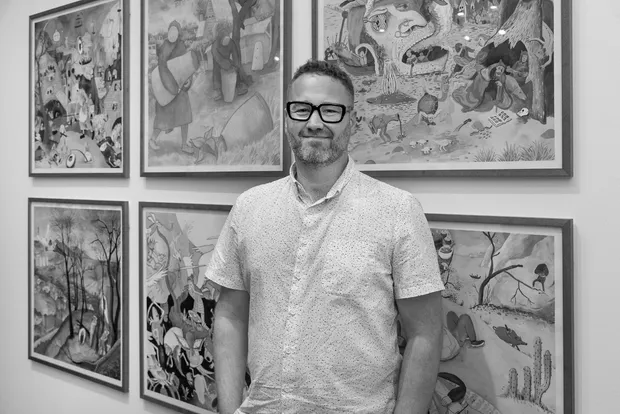
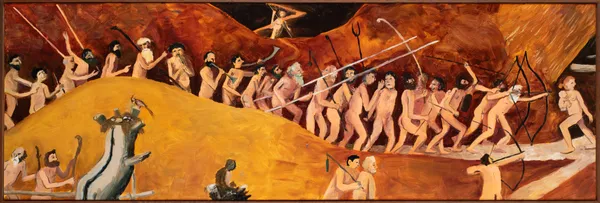
Leigh Rigozzi has been making all kinds of art for years. He has made small press, beautiful, hand made DIY publications that exist in small, precious editions, he’s edited, written, taught and shared his world. No matter what he does, myth permeates his work: the narratives of the Bible, the strange mundane reality of his life, and the weird spaces of his own invention. He carries fragments and tales, and he sees peculiar detail. Painting has always been around as Rigozzi has explored art; but in recent years, painting came to the fore. Rigozzi’s art drifts through fragments of his life: his mate Alex has a sore eye, trees he loves are cut down, a pile of discard mattresses glow pink in the sunset. The abject is balanced out moments of celebration: trees so persistent Rigozzi sees them as friends, the thrill of disobedience, an astonishing rendering of a bonfire. Rigozzi’s art is the cascade of his life, his fascinations, losses and triumphs, all drenched in sweet human wonder.
Samantha Hawley is a bit scary, actually. Her large, dense images have the energetic overreach of an extreme metal drummer, pummelling with a finely tuned, obsessive need to leave no gap in the sound; driving forward with a complexity that does not need form as much as it needs to just expand. There’s no space that cannot be explored and claimed in Hawley’s work; there is an edge of beautiful mania and devotion to her medium and extracting all its possibilities; they are exhilaration, exhaustion, commitment.
Joshua Harvey has captured a most cautious and exquisite quality of memory and loss. When you look at something like old home VHS tapes, or even super 8 film, the medium itself is a signifier of an era: the film is faded, the pixels are too drenched: the way It looks is another country, now adrift in time. Joshua’s faded parchment palette has this emotional weight: here is the memory you hold in your hand when you open a shoebox rescued from an attic, faded over time and from another life to begin with. All we have are old photographs, and in two generations the actual connection will drain away, and all anyone will know is someone loved this view, once, in another country.
Armie Sungvaribud is part of a tradition of ceramic making that stretches back some three thousand years: Ceramic vessels have been made by Thai people for that long. What Armie does is old, but its of this moment in her life right now too: her expressive aesthetic is unbolted and pleasingly informal, fresh and exuberant and above all, singular: Armie is making her own way in the world, finding space and filling it with new fables and gentle jokes in ceramics. Here is humour and joy and all those good things that carry us through the rough bits. Joy is pretty crucial.
Natalie Holtsbaum is being quiet in a cave. Her precious dark ink images of light and dark slowly merging and defining one another are time spent in a space that resonates of the slowest of all interactions: the sea carving itself into the shoreline, making a thousand sculptures guide by the distant gravity of the moon. Here in this between space, a human, moving on a much faster and shorter time scale than the movement of the ocean used to make this hollow shelter, might find pause to look at the dark and the light, and hold it in her hands: Natalie has made tiny drawings of her hushed and secret temple, and they are like the strange, precious fragments of shell and plant that create a punctuation along the eternal poem of the beach. If you are quiet enough, you will hear the sea.
Sophie Coe’s series of horses’ reeks of anger; the animals are gorgeous, muscular, even wild, yet are contained and restrained, unhappy. They do not want to be beautiful. They want to be outside, elsewhere. Sophie Coe can paint very well; yet she is prepared to see this as a problem, as something to subvert: what is it to create an exquisite rendering of pain? Beauty becomes pain and we cannot live outside of it. We internalise, and it is so terrifying that we get so used to mundane horror made of things we were told were beautiful. This tension is balanced and devastating: who is competing with who? Who forced those rules onto anyone? Why should anyone compete at all? What is the achievement of beauty when all it does is set you at odds with those you should stand alongside?
Final word: welcome to Platform, all six of you. You are fortunate to be here, but more than that, we are lucky to see you. Art is a story that is old and still being made, and each artist adds something new: when they bring themselves along, artists are being a bit bold and a bit daring, possibly mad, certainly vulnerable, but life is a calculate risk anyway. Art that does not risk something hardly seems worth it, and as wars and stupidity cramp our lives, and as genocides happen, as artificial intelligence snake oil drinks all our water, remember that being creative is even more important than it ever has been, and that art tells stories and is a story, and that each artist does something necessary, and there is no such thing as small. Every story is a picture, so make not the best one, but your one: only you can do that. We’d all love to see it.
- Andrew Harper, 2026
[1] I have thought, recently, much about how art traverses time. There are paintings that are rather old, and they change across eras and remain significant, and that is something words really cannot do.